First 100 Customers: Indie SaaS Tactics That Work in 2026
How indie SaaS founders get their first 100 paying customers in 2026 — the channels that work, the ones that don't, and how to pick two channels and go deep.
· Justin Boggs
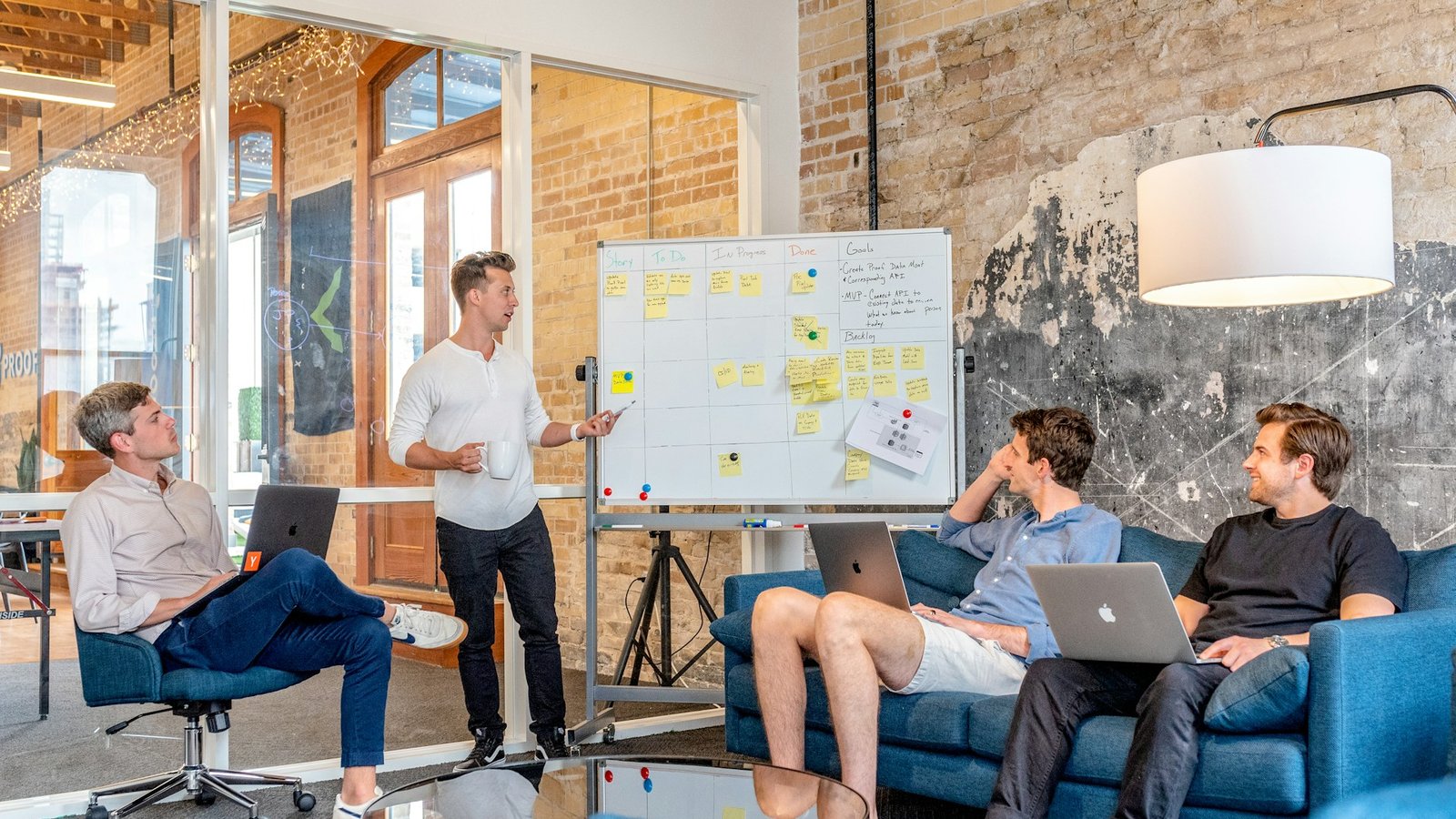
Photo by Austin Distel on Unsplash
Getting your first 100 paying customers in 2026 still comes down to manual, unscalable work in two or three channels — not ads, not virality, not a growth hack. The channels that reliably produce early customers for indie SaaS are direct outreach to people with the problem, sustained presence in the communities where they already gather, a launch moment that concentrates attention, and SEO that starts compounding from day one even though it pays out later. Everything else is a distraction at this stage. This post is the honest version of how each channel works, what it costs in time, and how to pick yours — written ten days after my own launch, with the bruises still fresh.
TL;DR
- Your first 100 customers come from manual, founder-led work — every durable early-growth story is some version of "do things that don't scale."
- Pick 2 channels, not 5. Research on consumer breakouts found most used exactly one acquisition strategy; none used more than three.
- Direct outreach is the fastest feedback loop; communities build compounding trust; launches are a spike, not a strategy; SEO is the slow channel you start anyway.
- Track one number: conversations with real prospects per week. It predicts your first 100 better than traffic does.
Why the first 100 is a different game than the next 1,000
The first thing to internalize is that early acquisition doesn't resemble marketing as you've seen it practiced by companies with customers. Marketing at scale is a system: channels, funnels, budgets, attribution. Acquisition at zero is a series of individual conversations that you, the founder, have one at a time.
This isn't a motivational framing — it's what the record shows. When Lenny Rachitsky interviewed teams behind the biggest consumer apps about how they got their first 1,000 users, the pattern was stark: only seven strategies accounted for essentially all early growth, most companies used exactly one of them, and none used more than three. Every one of those strategies was a form of going to your users directly — none of them started with paid acquisition. Paul Graham made the same argument a decade earlier in Do Things That Don't Scale: founders systematically underestimate how much early traction is hand-cranked, because by the time a company is visible, the hand-cranking is invisible.
For an indie SaaS founder, this is actually good news. The channels that work at this stage are free. They cost time and discomfort instead of money, which is the trade you want when you have more conviction than budget. The bad news is the corollary: there is no configuration of tools, automations, or content calendars that substitutes for you personally talking to strangers about their problem.
The second thing to internalize: a customer is not a user. A hundred free signups tell you people will accept a free thing. A hundred paying customers tell you the problem is real, the price is survivable, and word of mouth has raw material to work with. Every tactic below is aimed at the paying kind, which changes how you run them — you're not chasing volume, you're chasing the specific people whose problem is sharp enough to spend money on. If your pricing isn't settled yet, that's upstream of all of this; I wrote a framework in SaaS pricing for non-tech founders.
What are the channels that actually produce early customers?
Four channels show up over and over in real first-100 stories. Here's the honest comparison:
| Channel | Cost | Time to first customer | Compounds? | Failure mode | | --- | --- | --- | --- | --- | | Direct outreach | Free (your time) | Days to weeks | No — linear | Sounding like spam | | Community presence | Free (your time) | Weeks to months | Yes — reputation | Drive-by self-promotion | | Launch platforms | Free | One spike | No — a moment | Treating it as a strategy | | SEO / content | Free (your time) | Months | Yes — strongest | Quitting at month two | | Paid search ads | $5+ per click | Days | No — stops with spend | Burning budget pre-message-fit |
Direct outreach is the fastest loop. Find people who visibly have your problem — they posted about it, they use a competitor, they're in your network's orbit — and write to them individually. The version that works is not a pitch. Paddle's guide to getting your first 100 SaaS users frames it well: build a relationship, start a conversation, make a small ask, and only escalate to "want to try it?" once there's an actual exchange happening. Their flagship example is Lemlist, which rode outbound email to over 10,000 customers and $6M in ARR in three years. You won't replicate that scale by hand — but you don't need to. Ten thoughtful messages a day, every weekday, is 200 conversations a month, and at even a 5% conversion that channel alone can carry you a meaningful way toward 100.
Community presence is slower and compounds harder. The canonical story is DesignJoy's Brett Williams, who built his service business almost entirely from the Indie Hackers community — not by posting ads, but by leaving thousands of genuinely useful comments and sharing his numbers until people sought him out. The mechanic is reputation: in any community, the founders who extract value are ignored and the ones who deposit value get discovered. Reddit, Hacker News, Indie Hackers, and niche Discords all run on this same economy.
Launch platforms (Product Hunt, Hacker News, BetaList) concentrate attention into a day. They're real — my own June 1 launch drove the biggest single-day spike Coding Capybaras has had — but a spike is all they are. I wrote the full retrospective with timestamps in the Product Hunt launch playbook.
SEO is the channel that does almost nothing for your first 10 customers and a great deal for your first 1,000. Video tool VEED is the standout small-team case: roughly $1M ARR in under a year, bootstrapped, by pairing Quora answers with dozens of landing pages targeting specific use-case searches people were already making. The lesson isn't "SEO is fast" — it usually isn't — it's that use-case-specific pages ("add subtitles to video") rank long before generic ones ("video editor") ever will.
Paid ads earn their row in the table mostly as a warning. Google Search puts you in front of problem-aware buyers, but SaaS keywords routinely run past $5 a click, and at a pre-revenue stage you will spend message-fit tuition money you don't need to spend. The free version of the same insight: read the search ads in your niche, because they tell you what positioning your funded competitors have already paid to test.
How do you pick your two channels?
Not all four. Two. The constraint isn't ideological — it's that each channel only produces results past a threshold of consistent effort, and a solo founder's week only contains enough hours to push two channels past that threshold. Spreading across five channels means all five stay below the line where anything happens.
The selection logic is about matching the channel to where your buyers already are and what motion suits you:
Pick direct outreach if your customer is identifiable as an individual — you can name the job title, find them on LinkedIn or X, or see them complaining in public. B2B and prosumer tools almost always qualify. Skip it if your buyer is anonymous or impulse-driven.
Pick communities if your customers congregate somewhere specific and you can stomach being a regular, not a tourist. This was my pick for Coding Capybaras: non-tech founders shipping with AI tools live in r/SideProject, Indie Hackers, and the indie-maker side of X, and I was already reading those places daily anyway. The channel works when participation is something you'd half-do anyway; it fails when every comment is secretly an ad.
Pick SEO as your slow second channel if your product maps to things people search — comparisons, how-tos, error messages, "X vs Y." It's the second channel for most indie SaaS because it runs in the background while your active channel produces conversations. The catch is the timescale: content published today ranks in months, which is exactly why you start now rather than after the active channel plateaus.
Treat your launch as an event inside this plan, not as one of the two channels. Launches work dramatically better when the other channels are already warm — the people you've been talking to for six weeks are your day-one upvoters and commenters.
flowchart TD
    A[Can you name and find<br/>your individual buyer?] -->|Yes| B[Channel 1:<br/>Direct outreach]
    A -->|No| C[Channel 1:<br/>Community presence]
    B --> D[Do buyers search for<br/>this problem?]
    C --> D
    D -->|Yes| E[Channel 2: SEO,<br/>started day one]
    D -->|No| F[Channel 2: the one<br/>you didn't pick first]
    E --> G[Launch = an event<br/>both channels feed]
    F --> G
Whatever pair you pick, commit for eight weeks before judging. Every channel looks broken in week two. The founders who get to 100 are mostly the ones who didn't switch channels at the first silence.
The weekly operating rhythm (what this looks like on a calendar)
Tactics lists don't get executed; calendars do. Here's a concrete weekly shape for the most common pairing — outreach plus SEO — sized for a founder doing this alongside building:
Monday through Friday, 45 minutes: ten personal outreach messages. Personal means you reference the specific thing they posted, shipped, or complained about — the test is whether the message could only have been sent to this one person. Track every send in a spreadsheet: name, where you found them, what you said, what happened. This sheet becomes your conversion data, your testimonial pipeline, and — pattern by pattern — your positioning document.
Daily, 20 minutes: community participation, answering questions in your niche with zero links. The discipline of not linking is what makes the occasional link land later.
Twice a week, 2 hours: one piece of search-targeted content. Use-case specific, answering one real question per piece, VEED-style. If writing twice a week sounds impossible alongside building, that constraint is solvable — producing this content consistently is one of the things I've systematized hard at Coding Capybaras.
Friday, 15 minutes: count one metric — real conversations with prospects this week. Not traffic, not impressions, not followers. Conversations. At zero customers, this number predicts your trajectory better than anything an analytics dashboard shows you, because every early customer arrives at the end of a conversation thread you can trace backwards.
Two amplifiers make the whole rhythm work harder. First, close the loop with every early customer: a personal email within a day of purchase, asking one question — what almost stopped you from buying? The answers rewrite your landing page. (Automated onboarding can coexist with this; the personal note is in addition to whatever lifecycle emails you run.) Second, ask for the referral early. Your tenth customer knows three people with the same problem, and at this stage a warm intro converts at rates no channel can match.
What earns zero minutes on this calendar: paid ads, a second social platform, cold LinkedIn automation tools, "going viral," and redesigning the landing page for the fourth time. All of it is either premature at this stage or a procrastination format that feels like work.
The mistakes that stall founders at 30 customers
There's a predictable stall pattern between roughly customer 20 and customer 50, and it almost always traces to one of four mistakes.
Quitting the channel right before it compounds. Outreach feels bad in week one (strangers, silence) and communities feel pointless in week three (no attributable customers). Both have lag built in: reputation and rankings are stock variables, and you've been measuring flow. The eight-week commitment exists precisely to bridge this gap.
Selling to users instead of buyers. If you've got 500 free signups and 12 paying customers, the temptation is to squeeze the 500. Usually the 500 are the wrong people — adjacent to the problem but not in enough pain to pay. The fix is upstream: go where the acute version of the problem lives, even if the pond is smaller. Sharp positioning beats broad reach at this stage, which is also the honest takeaway from every boilerplate comparison I've written — the products that win their niche name their buyer precisely.
Confusing the launch spike for product-market signal. A good Product Hunt day delivers a wave of curious tourists, a handful of whom buy. Founders read the spike as "demand," watch the following Tuesday's flat line as "death," and panic-pivot. Both readings are wrong; the launch measured novelty, and the weeks after measure the only thing that matters — whether your two channels produce a steady trickle without an event behind them.
Hiding behind building. The most comfortable way to avoid rejection is to add features, and AI coding tools have made this failure mode dramatically cheaper to indulge — you can now build the wrong thing at unprecedented speed. The uncomfortable rule that follows: once you're live, customer conversations come before code on every day's priority list. Building is the reward for finishing your outreach.
The thread through all four: at this stage, distribution discomfort is the job. The product was the entry fee.
Frequently asked questions
How long should it take to get 100 paying customers?
There's no honest universal number — it depends on price point, market size, and how sharp the problem is. The more useful framing is rate: if your channels are producing real prospect conversations weekly and some predictable fraction convert, you can project your own timeline within a few weeks of starting. Months, not days, is the realistic order of magnitude for most indie SaaS.
Should I do a Product Hunt launch before or after I have customers?
After you have at least a handful, ideally. Early customers give you social proof for the launch page, people who'll genuinely comment on launch day, and confidence the product survives contact with strangers. A launch into a vacuum produces a traffic spike with nothing to catch it — I learned several versions of this firsthand, documented in my launch retrospective.
Is cold outreach dead in 2026?
Mass automated cold email is mostly dead — deliverability filters and sheer volume killed it. Personal, researched, low-volume outreach is very much alive, because it was never really "cold": you're contacting someone about a problem they've publicly demonstrated having. The test is whether your message could only have been written to that one person.
Do paid ads ever make sense before 100 customers?
Rarely. The economics are hostile — SaaS clicks can easily run past $5 each — and pre-message-fit, you're paying to discover your landing page doesn't convert. The exception is a small, capped experiment ($200, one tightly-defined search term) to test whether problem-aware searchers convert at all. Treat it as research spend, not acquisition.
What metrics should I track at this stage?
One primary: real conversations with prospects per week. One secondary: paying customers, total. Traffic, social followers, and signup counts are morale metrics at this stage, not steering metrics. A simple spreadsheet beats an analytics stack until well past customer 100.
What if my product doesn't have a community to embed in?
Then your buyers gather somewhere you haven't found yet, or your niche is defined too narrowly to congregate — which is itself useful information. Look one level up: the community for "freelance designers" exists even if "freelance designers who invoice in euros" doesn't. If genuinely nothing exists, weight direct outreach and SEO instead; communities are one channel, not a requirement.
Conclusion
The path to your first 100 indie SaaS customers in 2026 is unglamorous and almost embarrassingly concrete: pick two channels matched to where your buyers actually are, work them on a weekly calendar for eight weeks before judging, count conversations instead of traffic, and personally close the loop with every customer who pays you. The founders who stall are rarely short on tactics — they're spread across five channels at sub-threshold effort, or they retreated into building when the outreach got uncomfortable. The work doesn't scale, and that's the point: right now you're the only company in your market willing to do it by hand. If you're building toward your own first 100 with AI coding tools, Coding Capybaras is the free boilerplate I built for exactly that journey — it handles the product plumbing so your hours can go where this post says they should.